
From the back seat to the front seat
For flight nurses, flight paramedics, EMS crews and air-medical teams who have spent years behind the pilot and want to know what it takes to sit up front. Walter has made that trip. Here is the honest version.
Questions? Call (518) 634-6375 · info@flyheliadk.com
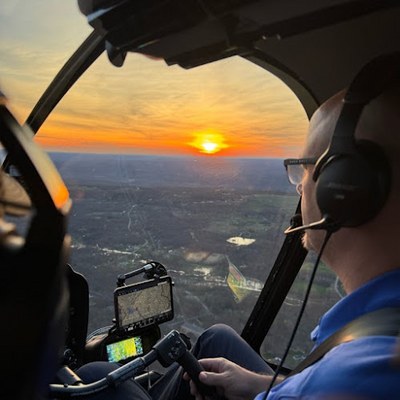
He rode in the back first
Walter Dusseldorp started as a medic, moved to flight medic, and then spent years as a healthcare executive — MBA, FACHE — before going the full distance through helicopter aviation to CFII (Helicopter). He is the owner, chief pilot and Chief Instructor at North Country Heli Flight, and the pilot on every training flight.
He knows what it is like to sit behind the pilot through a scene call and wonder what the front seat would take. He also knows what the path actually costs in money, time and family, because he paid it. That is the conversation this page is about.
Crew-member Discovery Flight and the career-path session
Crew-member Discovery Flight
- Same price as every Discovery Flight — no crew discount, and we say so up front
- Credited toward training if you enroll within 30 days
- Briefed by a former flight medic who knows your side of the aircraft; the debrief is about the front seat, not the view
- Robinson R44 Raven II with Walter, CFII (Helicopter), from Harris Airport (83K)
Career-path session
- The 15-minute call: where you are, what you want, whether this makes sense for you
- The one-hour ground session at the hangar: the realistic path — Private, Commercial, CFI, the hour-building years — and what each step costs here
- Your schedule and your family in the plan, not an idealized student's
- We don't promise jobs or pay; we show you the path. No salary figures, no placement claims.
Weight: 285 lb per seat and no more than 540 lb total for everyone on board other than the pilot in command. The pilot makes the final call on every flight depending on weather, fuel and flight length.
What the front seat actually takes
The ground session goes through this in detail, with our published numbers. The short version:
- Step 1Private Pilot — Helicopter (PPL-H). Your first FAA helicopter certificate. The FAA minimum is 40 hours; most students need more. Dual instruction here is $750 per Hobbs hour all-in; prepaid blocks are 10 h $7,000 and 25 h $16,875. The cost table shows minimum, typical and conservative estimates.
- Step 2Instrument and Commercial. The commercial certificate is what lets you be paid to fly. The instrument rating is where air-medical operators expect you to be headed.
- Step 3CFI / CFII. For most helicopter pilots, instructing is how the next several hundred hours get built.
- Step 4Building hours. Instructing, tours, utility work — the years between a commercial certificate and the hour minimums the operators you already work with publish for their pilots. We show you those minimums; we do not promise you will reach them, or when.
Crew schedules fit this better than most jobs: a 24/48 or a block of shifts leaves whole days to fly, and block-time students stay in the unit on the field at no additional cost. Weekday lessons by appointment; full availability November–April.
Frequently asked questions
Will you help me get a flight-pilot job?
Is the crew Discovery Flight cheaper?
I already have a medical from my flight program. Does it count?
Is there a weight limit?
Tell us where you sit now
Send the form and Walter will set up the Discovery Flight, the career-path session, or both. Or go straight to the 15-minute call.
Also see: Flight training and the PPL-H cost table · Crew Resource Management for healthcare leaders · How students pay for it